
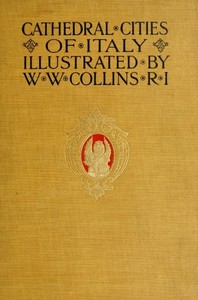
Cathedral Cities of Italy by W. W. Collins
Forget the standard travel guide. Cathedral Cities of Italy is something else entirely. Published in 1911, it captures Italy in a specific, elegant moment, just before the world changed forever. W.W. Collins, a British writer with a clear passion for art and history, acts as your personal cicerone. The book is structured as a grand tour, moving from city to city. In each chapter, he focuses on the heart of the place: its cathedral. But he doesn't just describe the facade. He pulls you inside, explaining the symbolism in the mosaics, the engineering behind the soaring arches, and the local legends carved into the pulpits.
The Story
There isn't a fictional plot, but there is a powerful narrative thread: the story of Italy itself, told through stone and glass. Collins starts in the north with Milan's dizzying Duomo, a project so vast it took six centuries to complete. He then sweeps you south to Florence, where Brunelleschi's dome was a revolutionary act of defiance against gravity. You'll visit Pisa, Siena, Orvieto, and Rome, learning how each cathedral reflects the pride, piety, and politics of its city. He connects the buildings to the artists—Giotto, Michelangelo, Pisano—and the powerful families who paid for it all. It's the biography of a nation's soul, written in architecture.
Why You Should Read It
This book gives you superpowers. The next time you see a photo of the Leaning Tower (which is, of course, a cathedral bell tower), you won't just see a quirky tilt. You'll know the ground gave way, and the struggle to finish it anyway. When you look at the striped marble of Siena's cathedral, you'll feel the fierce civic pride of a city that wanted to outdo Florence. Collins has a gift for finding the human story in the grand scale. His writing, while of its time, is filled with genuine wonder. He makes you care about the nameless masons as much as the famous architects. It turns a sightseeing checklist into a series of personal discoveries.
Final Verdict
This is the perfect book for the curious traveler, whether you're planning a trip or dreaming from your armchair. It's for anyone who feels that a great building has a story to tell and wants to learn the language. History and art lovers will find a treasure trove of detail, told with a companionable voice rather than academic jargon. Be aware it's a period piece—its perspectives are early 20th-century—but that's also part of its charm. It's a love letter to Italy's timeless beauty, written with ink and immense affection. Keep it on your shelf next to your modern guidebook; it provides the depth that makes the beauty truly resonate.
You are viewing a work that belongs to the global public domain. You do not need permission to reproduce this work.









Thomas Young
7 months agoSurprisingly enough, the atmosphere created is totally immersive. Highly recommended.