
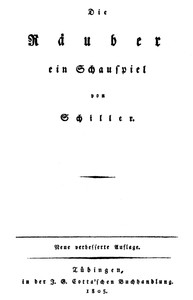
Die Räuber: Ein Schauspiel by Friedrich Schiller
Let's talk about Die Räuber (The Robbers). I picked it up knowing it was a classic, but I wasn't ready for how explosive it is. Written by a young Friedrich Schiller, it feels more like a modern psychological thriller than an old play.
The Story
The story revolves around the Moor family. The father, Count Maximilian, loves his eldest son, Karl, a fiery and freedom-loving university student. His younger son, Franz, is jealous, cold, and power-hungry. Franz forges a letter to make Karl look like a disgrace, leading their heartbroken father to disown Karl. Devastated and feeling betrayed by society, Karl disappears into the Bohemian forests and becomes the leader of a band of robbers, seeking a twisted form of justice.
Back home, Franz tells their father that Karl is dead, seizes control of the estate, and tries to force Karl's fiancée, Amalia, to marry him. Meanwhile, Karl's life as a robber king brings him no peace. His actions grow more violent, and he's torn between his noble ideals and the brutal reality of his choices. The paths of the two brothers are on a collision course that leads to a devastating and unforgettable finale.
Why You Should Read It
This play grabs you because of the brothers. Karl isn't a simple hero; he's a tragic figure. You understand his rage against a hypocritical world, but you also watch him become a monster. Franz is a fantastic villain—calculating, cynical, and utterly compelling in his wickedness. Their conflict is the engine of the story.
Schiller packs this with huge ideas about individual freedom versus social order, the corruption of power, and whether you can use evil means to fight for a good cause. It's a play that shouts its questions rather than whispers them. The emotions are big, the speeches are passionate, and the stakes feel life-or-death. It's a raw look at what happens when people feel trapped and decide to break all the rules.
Final Verdict
This book is perfect for anyone who loves intense family sagas, complex characters, and stories that make you think. If you enjoy Shakespearean tragedies with their doomed heroes and power struggles, you'll find a lot to love here. It's also a great pick for readers curious about the origins of the 'anti-hero' or the Sturm und Drang (Storm and Stress) literary movement, which was all about big feelings and rebellion. Just be ready for a turbulent, emotional, and totally gripping experience. It's a classic that hasn't lost any of its bite.
The copyright for this book has expired, making it public property. Enjoy reading and sharing without restrictions.
Anthony Young
1 year agoVery helpful, thanks.
Edward Clark
1 year agoI stumbled upon this title and the content flows smoothly from one chapter to the next. I would gladly recommend this title.
Jackson Ramirez
1 year agoCitation worthy content.
John Anderson
1 year agoThe fonts used are very comfortable for long reading sessions.


Susan Lee
4 months agoHaving followed this topic for years, I can say that the cross-referencing of different chapters makes it a great study tool. This should be on the reading list of every serious professional.