
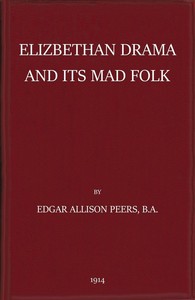
Elizabethan Drama and Its Mad Folk by E. Allison Peers
Before TikTok breakdowns and endless TV dramas about washed-up starlets, the Elizabethan stage was literally the place to be if you wanted to see somebody crack. But here’s the trick: when a character loses their mind in Shakespeare, Webster, or Dekker, it was never just for no reason—it was the loudest signal in the room that a whole world had crumbled down on them. Peers wasn’t the kind of stiff academic who make you feel slow—he guides you through that spooky, gorgeous pile of madness with pure obsessive energy. So pour yourself a tea and listen in, because the gossip inside is from the crazy golden age of English theater.
The Story
This isn’t the plot of one book—it’s the clever unpacking of a whole movement. Peers wanders through the biggest hits of the Elizabethan and Jacobean scene, from *King Lear* storming around his heath to nameless revengers rattling their chains in back corner plays. He wants to sort out where these characters sit in the universe of the play: are they driven insane by a lover’s death? A crown stolen? Witchcraft? Or just the crushing weight of a really bad social media?? Their madness acts exactly like a locked-room puzzle—what sets it off, and what does it mean for the sane people left behind? The best part? It unravels how the playwrights *used* insanity: as commentary, as tearjerker, or as pure, bleak comedy that made folks 400 years ago laugh nervously just like we do today.
Why You Should Read It
OK, but imagine sitting down with your most knowledgeable movie-and-theater geek friend, and they start spilling ALL the inside secrets: Why does *Hamlet* actually see the ghost as some terrifying omen—not a clumsy prop? Why does the villain usually end up mumbling curses and dodging light before he dies? Peers is THAT buddy. The feels in his explanations built a brick sense of sad reality about those era times: a woman who “goes mad from grief” was punished for outward emotions in a society with no outlets. He doesn’t use impenetrable theory but shows you spot about real mental struggles these wild stories smuggled past their censoring royals. When he wrote it, the whole point was this—sLAM a door in the face of 'it's just entertainment.' Feels angry at how things ended for those old characters, and kinda heartbroken in a beautiful way. Your brain gets that moment.
Final Verdict
Definitely NOT for show-offs who acts above feeling tears in your eyes over ghosts—NO, wait it IS FOR THEM MOST because they’ll melt down on page 83 when duchesses hair stands of white. Perfect for actors snatching a book before *Hamlet* rehearsal—use Peers’ wisdom so your ghost screams hit terrifying depth. This is for people who taught themselves everything by reading show scripts and staring at sepia frontispieces: know that cold scent of old candle wax and feel like you meet someone who spent thirteen years building a lamp that see backstage better. Buy it, read it lowdly to bored friends. You never sit through ‘Madness in theater’ essays same again.
There are no legal restrictions on this material. You are welcome to share this with anyone.
Margaret Brown
4 months agoI've been looking for a reliable source on this topic, and the wealth of information provided exceeds the average market standard. The insights gained here are worth every minute of reading.
Sarah Gonzalez
4 months agoThis work demonstrates a clear mastery of contemporary theories.
William Moore
7 months agoIt took me a while to process the complex ideas here, but the structural organization allows for quick referencing of key points. An excellent example of how quality digital books should be formatted.
Paul Gonzalez
8 months agoThis work demonstrates a clear mastery of contemporary theories.
Richard Perez
4 months agoIt effectively synthesizes complex ideas into a coherent whole.