About 596 minutes
Anthropology — A Closer Reading
Anthropology
136,880 recorded words. 1 minutes difference from this book's estimate.
View Gutenberg source #71233
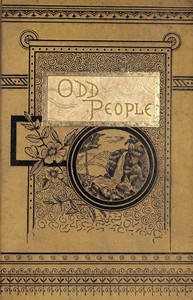
The man-eaters and other odd people — Reading Companion can be approached with a clearer sense of reading commitment from its source measurements: 136,647 words, 9 hr 55 min estimated reading time, and 21 detected text sections.
The text analysis averages about 28.4 words per sentence, while the detected sections provide another way to judge how the source is divided.
Project Gutenberg metadata also associates the work with “Ethnology,” connecting these edition facts with the source record’s subject description.
Explore this collection
These alternatives are selected using recorded categories and estimated reading time.
About 596 minutes
Anthropology
136,880 recorded words. 1 minutes difference from this book's estimate.
View Gutenberg source #71233About 586 minutes
Anthropology
134,626 recorded words. 9 minutes difference from this book's estimate.
View Gutenberg source #35911About 719 minutes
Anthropology
165,339 recorded words. 124 minutes difference from this book's estimate.
View Gutenberg source #70999Search stored excerpts and compare books → Choose by your preferences →
Choices use stored catalog measurements. Estimates vary with reading speed. A shared category is a catalog label, not a claim that two books have the same argument or literary quality.
Search reads excerpt text stored with this catalog and links to its associated Gutenberg record. The connection is stored in the site database; this tool does not recheck that every excerpt is word-for-word identical to that external record. Excerpt search does not cover every chapter and does not verify historical publication dates.
Catalog snapshot checked: 2026-09-25. Coverage: 91 public books, 91 available source excerpts.
Read the complete public-domain text at its original source.
Read on Project GutenbergMayne Reid’s The Man-Eaters and Other Odd People (1860) is structured as a geographical tour of human diversity, proceeding from the Arctic Circle to the southernmost tip of Africa. Each chapter isolates a single group—such as the Esquimaux, the Turcomans, or the Hottentots—and describes their physical appearance, clothing, dwellings, and subsistence methods. The book’s title is somewhat misleading: cannibalism is only one of many topics, and Reid devotes far more space to horse-training techniques, hunting practices, and body ornamentation than to dietary extremes.
Reid organizes his material like a travel narrative, moving from one “odd people” to the next with little connective commentary. The chapters are self-contained vignettes, each opening with a geographical location and a physical description of the inhabitants. For example, the Turcomans are introduced through their horses: “Their bodies are long in proportion to the bulk of carcass; and they do not appear to possess sufficient compactness of frame.” This attention to physique recurs throughout, as Reid measures every group against an implied European standard. He notes the Esquimaux’s “short, squat figures” and the Hottentots’ “yellowish-brown skin,” but rarely speculates on origins or migrations. The structure thus mimics a cabinet of curiosities, where each exhibit is described in isolation.
Across the excerpts, Reid returns to three bodily details: skin color, stature, and the condition of teeth. The Esquimaux are “of a dirty brown colour”; the Turcomans have “large heavy heads”; and the Hottentots are noted for their “projecting cheek-bones.” Teeth receive special attention in the context of diet: Reid describes how the Esquimaux wear down their teeth by chewing leather, and how the “man-eaters” of the title sharpen theirs into points. This focus on the body as a record of lifestyle is consistent with Reid’s method of inferring habits from physical evidence. He writes, for instance, that the Turcomans’ horses are kept “in an under-condition” to improve endurance, and that the riders judge fitness by feeling the muscles “on the crest, at the back of the neck, and on the haunches.”
Reid’s descriptions often shift abruptly from domestic life to martial activity. In the Turcoman chapter, he moves from the interior of a felt tent to the horse-training ground, then to a plundering expedition, and finally to the use of war dogs. This pattern—dwelling, work, conflict—appears in other chapters as well. The Esquimaux are shown inside their snow houses, then hunting seals, then fighting with neighboring tribes. The transitions are not always smooth; Reid sometimes inserts a long paragraph on a single topic, such as the training of horses, before returning to the people themselves. The effect is a series of vivid, almost cinematic scenes, each illustrating a different aspect of daily life.
Animals are not merely background in Reid’s account; they are central to his definition of each group. The Turcomans are inseparable from their horses and dogs; the Esquimaux from their dogs and seals; the Hottentots from their cattle. Reid devotes entire paragraphs to the breeding, training, and use of these animals, often in more detail than he gives to human social organization. For the Turcomans, he explains how horses are fed “barley alone” and covered with “numuds” to sweat them, and how dogs are trained to guard the camp. This emphasis suggests that Reid viewed a people’s relationship with animals as a key indicator of their “oddness.” The book might be read as much as a natural history of domesticated species as a survey of human races.
Readers approaching The Man-Eaters and Other Odd People should expect a series of discrete ethnographic sketches rather than a unified argument. Reid’s voice is that of a popularizer, not a scientist, and his observations are filtered through the assumptions of his era. The book rewards attention to its recurring motifs—the body, animals, movement—and to the way Reid builds each chapter around a few vivid details. It is best read as a period piece that reveals how mid-nineteenth-century readers were introduced to global human diversity.
I keep thinking about that 1860 survey, how it catalogues people by what they eat and how they ride, yet somehow feels less like a list and more like a quiet, wandering gaze. It reminded me of the gentler, more reflective tone in Odd people — Background and Themes, which sits beside it like a whispered footnote, making the strangeness feel almost familiar.
Use these questions to collect your thoughts before moving on.