
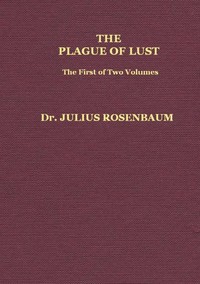
The Plague of Lust, Vol. 1 (of 2) by Julius Rosenbaum
Let's be clear from the start: this is not a novel. If you're picking up 'The Plague of Lust, Vol. 1' expecting a story with characters and a plot, you'll be confused. Instead, think of it as a passionate, sprawling investigation written by a 19th-century doctor on a mission.
The Story
Julius Rosenbaum isn't telling a fictional tale; he's hunting for the truth. The book is his attempt to trace the terrifying path of syphilis through history. He starts with a big question: did this disease come from the Americas after Columbus's voyages, or was it already hiding in Europe? Rosenbaum becomes a historical detective, sifting through old medical texts, travelers' accounts, and even poetry and art, looking for clues. He argues fiercely that the disease was present long before 1493, pointing to descriptions in ancient Greek and biblical writings that he believes match the symptoms. The 'story' is his relentless argument, showing how fear, shame, and misunderstanding let the disease flourish and shape laws, wars, and everyday life for centuries.
Why You Should Read It
What grabbed me was the raw urgency in Rosenbaum's writing. You can feel his frustration with the silence and stigma surrounding the disease. He's not just listing facts; he's trying to start a conversation that no one else wanted to have. Reading it today is a fascinating double experience. First, you get a window into the cutting-edge (and sometimes very wrong) medical thinking of the 1800s. Second, you see how a public health crisis was tangled up with morality, colonialism, and blame. It's a stark reminder that how we talk about disease—who we blame, what we hide—has real consequences. Rosenbaum's book is a brave, messy, and deeply human attempt to fight that silence.
Final Verdict
This book is perfect for history buffs who like their nonfiction to have a strong point of view, or for anyone interested in the messy intersection of medicine, society, and morality. It's also a great pick for readers who enjoy primary sources—getting history straight from someone who lived it, with all their biases and passions intact. Be warned: the subject matter is graphic and the 19th-century language can be dense in spots. But if you're looking for a challenging, eye-opening, and utterly unique slice of history, Rosenbaum's investigation is worth your time. Just don't say I didn't warn you about the uncomfortable parts.
This content is free to share and distribute. Preserving history for future generations.
Sarah Lee
10 months agoFinally found a version that is easy on the eyes.
Sarah Martin
5 months agoI took detailed notes while reading through the chapters and the evidence-based approach makes it a very credible source of information. The insights gained here are worth every minute of reading.
Joseph Anderson
5 months agoThe citations provided are a goldmine for further academic study.
Thomas Wilson
1 year agoThe layout is perfect for tablet and e-reader devices.




Susan Wilson
11 months agoI decided to give this a try based on a colleague's recommendation, the quality of the diagrams and illustrations (if applicable) is top-notch. If you want to master this topic, start right here.