About 129 minutes
The Rural Life Problem of the United States Notes of an Irish Observer — Text and Context
Social Conditions
29,538 recorded words. 4 minutes difference from this book's estimate.
View Gutenberg source #27305
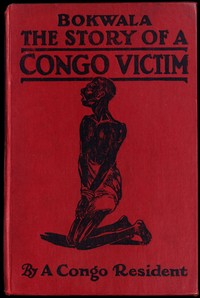
This digital edition of Bokwala: The Story of a Congo Victim — Themes and Context is described by source-level measurements including 28,722 words, 2 hr 5 min estimated reading time, and 12 detected text sections.
The text analysis averages about 26.0 words per sentence, while the detected sections provide another way to judge how the source is divided.
Project Gutenberg metadata also associates the work with “Congo (Democratic Republic) -- Social conditions,” connecting these edition facts with the source record’s subject description.
Explore this collection
These alternatives are selected using recorded categories and estimated reading time.
About 129 minutes
Social Conditions
29,538 recorded words. 4 minutes difference from this book's estimate.
View Gutenberg source #27305About 131 minutes
Social Conditions
29,984 recorded words. 6 minutes difference from this book's estimate.
View Gutenberg source #73613About 138 minutes
Social Conditions
31,639 recorded words. 13 minutes difference from this book's estimate.
View Gutenberg source #14760Search stored excerpts and compare books → Choose by your preferences →
Choices use stored catalog measurements. Estimates vary with reading speed. A shared category is a catalog label, not a claim that two books have the same argument or literary quality.
Search reads excerpt text stored with this catalog and links to its associated Gutenberg record. The connection is stored in the site database; this tool does not recheck that every excerpt is word-for-word identical to that external record. Excerpt search does not cover every chapter and does not verify historical publication dates.
Catalog snapshot checked: 2026-09-25. Coverage: 91 public books, 91 available source excerpts.
Read the complete public-domain text at its original source.
Read on Project GutenbergBokwala’s narrative opens with a direct address to the reader, framing his testimony as a response to the question of how Congo affairs appear from the native standpoint. The voice is immediate and personal, using the first person to recount a life reduced to a repetitive cycle: “rubber, chicotte, prison, rubber, prison, chicotte; and again rubber, nothing but rubber.” This rhythmic listing establishes the relentless pace of exploitation. The speaker anticipates reader fatigue with the repetition, then counters sharply: “If you are tired of hearing about it, what do you think we must be of living in it?” The language is plain but weighted, avoiding melodrama while making the monotony of suffering palpable.
The narrator’s tone is remarkably measured. When describing the prison—a crowded hut with “bamboo walls, and mud floor”—he adds, “That was all; and it was crowded promiscuously with men and women of all ages and conditions.” The word “promiscuously” is clinical, not sensational. He notes the prisoners were “fastened together with cords or chains round the neck, in groups of about ten with a fathom of chain or cord between each.” The precision of “fathom” suggests a mind that has learned to measure oppression exactly. Even when recounting a beating, the prose stays factual: “Down it came on me, lash after lash.” The restraint itself becomes a rhetorical device, making the horror more credible by refusing to embellish.
The narrative’s pacing mirrors the exhaustion it describes. Long passages of steady, chronological reporting—journeys into the forest, the search for rubber vines—are punctuated by sudden, compressed accounts of punishment. For instance, the description of cutting vines to extract sap faster is detailed and almost technical, but the consequence is stated bluntly: “it was not long before we began to find a dearth of vines.” The tempo then quickens into a series of failed attempts to escape the rubber regime, each paragraph shorter than the last. The climax of this section—the prison episode—is rendered in a single, breathless sentence: “I had to go back to my rubber work in the forest.” The effect is cumulative; the reader feels the narrowing of options.
Bokwala occasionally steps back from his story to comment on white behavior, revealing a sharp ethnographic eye. When a missionary insists on paying for a gift fowl, Bokwala remarks: “Truly the ways of white men are unaccountable! Some compel one to supply against one’s will what they want, and pay nothing or next to nothing for it; and then others refuse to take a thing as a gift, but insist on paying for it!” The parenthetical aside—“Of course, we like the latter way, but should not think of doing so ourselves”—adds a layer of irony. It shows the narrator’s awareness of cultural difference without rancor. Such moments are rare but significant, breaking the narrative’s forward drive to offer a comparative perspective on justice and reciprocity.
Readers should attend to the tension between Bokwala’s plainspoken testimony and the editorial apparatus surrounding it. The preface by H. Grattan Guinness frames the book as a humanitarian document, but the narrative voice resists that framing, insisting on its own terms. The gaps in the text—what is left unsaid about the speaker’s fate, the ellipses in the excerpts—are as instructive as what is stated. This is not a complete autobiography but a fragment of witness, shaped by a collaborator. The reader must weigh the authenticity of the voice against the conditions of its production.
I’ve shelved Bokwala for decades, its quiet horror never fading. His restrained words, the endless cycle of punishment—it lingers. Sometimes, late evenings, I pull down Mutual Aid: A Factor of Evolution — Themes and Context instead. It’s a strange comfort, Kropotkin’s gentle argument. I think Bokwala would have understood its truth, had his world allowed it. Both books speak of what binds us, one through its absence, the other through its hope.
Use these questions to collect your thoughts before moving on.









