About 226 minutes
Loom and spindle — Reading Notes
Social Conditions
51,926 recorded words. 2 minutes difference from this book's estimate.
View Gutenberg source #72757
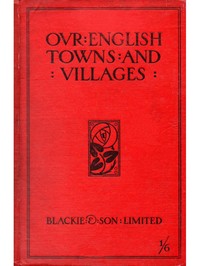
For Our English Towns and Villages — Edition Insights, the stored edition analysis reports 51,329 words, 3 hr 44 min estimated reading time, and 7 detected text sections.
The text analysis averages about 21.4 words per sentence, while the detected sections provide another way to judge how the source is divided.
Project Gutenberg metadata also associates the work with “Great Britain -- Social conditions,” connecting these edition facts with the source record’s subject description.
Explore this collection
These alternatives are selected using recorded categories and estimated reading time.
About 226 minutes
Social Conditions
51,926 recorded words. 2 minutes difference from this book's estimate.
View Gutenberg source #72757About 220 minutes
Social Conditions
50,550 recorded words. 4 minutes difference from this book's estimate.
View Gutenberg source #36683About 196 minutes
Social Conditions
45,006 recorded words. 28 minutes difference from this book's estimate.
View Gutenberg source #37580Search stored excerpts and compare books → Choose by your preferences →
Choices use stored catalog measurements. Estimates vary with reading speed. A shared category is a catalog label, not a claim that two books have the same argument or literary quality.
Search reads excerpt text stored with this catalog and links to its associated Gutenberg record. The connection is stored in the site database; this tool does not recheck that every excerpt is word-for-word identical to that external record. Excerpt search does not cover every chapter and does not verify historical publication dates.
Catalog snapshot checked: 2026-09-25. Coverage: 91 public books, 91 available source excerpts.
Read the complete public-domain text at its original source.
Read on Project GutenbergH. R. Wilton Hall’s Our English Towns and Villages (1906) opens with a preface that frames the book as a “reader” rather than a textbook, aiming to “arouse interest in the ‘why and the wherefore’ of things which can be seen.” The voice is that of a curator—Hall was Library Curator at Hertfordshire County Museum—speaking directly to “an intelligent and observant boy or girl.” The prose is plain, patient, and deliberately unadorned, built around concrete objects: a Norman doorway, a cross-legged effigy, a brass rubbing. Hall’s method is to let the relic prompt the history, not the other way around.
Hall’s narrative voice is that of a patient explainer, not a storyteller. He uses direct address (“you will know something worth knowing”) and simple declarative sentences. The tone is consistently instructive but never condescending. In the chapter on church architecture, he moves methodically from Saxon remnants to Norman arches to thirteenth-century pointed windows, each paragraph numbered and self-contained. The prose lacks dramatic peaks; its rhythm is steady, like a guided walk. Hall’s goal is clarity, not persuasion. He tells his reader what to look for—a “very old battered figure of a man in chain armour”—and then offers a cautious interpretation: “It used to be said that these represented crusaders; but nobody seems really to know what was the meaning of the cross-legged effigies.” That admission of uncertainty is characteristic. Hall does not pretend to know more than he does.
The book is organized into short, numbered sections within each chapter, resembling lesson notes more than continuous narrative. Each section isolates one observation: a window style, a type of grave slab, a change in armour. The chapters are meant to be “suggestive, not exhaustive,” as Hall writes, and the structure reflects that. There is no overarching argument, only a cumulative layering of details. The pace is deliberate, pausing on each object long enough to describe it and place it in a century. Hall uses repetition to reinforce chronology: “The Norman Period takes in the reigns of all the kings from William I to the time of King John.” He then repeats that same span when introducing pointed arches. This doubling helps young readers anchor the sequence without a timeline. The summaries at chapter ends recapitulate the key points in a single paragraph, reinforcing the lesson without adding new information.
Hall’s pace is uneven in a deliberate way. He lingers on physical details—the position of crossed legs on an effigy, the “strange worn letters” on an incised slab—then moves quickly through broader historical context. The effect is that of a museum tour: stop, look, then move on. The density of information varies sharply. In one paragraph, Hall lists three centuries of church building; in the next, he describes a single brass in Surrey. This variation keeps the reader attentive but can feel abrupt. The book’s pace is also shaped by its intended use: it is meant to be read aloud or discussed, with pauses for questions. Hall’s prose is written for the ear as much as the eye, with short sentences and frequent rhetorical questions (“You may, perhaps, find a very old battered figure…”). The rhythm is conversational, not literary.
Hall’s book is best read as a companion for looking, not for studying. The chapters work most effectively when the reader can pause and examine the thing described—a church tower, a brass rubbing, a market cross. The plain style and numbered sections make it easy to dip into a single chapter before a walk. Hall’s voice is that of a knowledgeable guide who knows when to step back and let the object speak. For a modern reader, the book offers a window into Edwardian educational methods and the local-history movement, but its real value lies in its patient attention to the physical traces of the past.
Reading this editorial note on Wilton Hall’s school reader, with its gentle insistence that children notice the worn step or crooked beam, I remembered standing in my grandmother’s cottage, tracing a date scratched into the lintel. That quiet ache of the past pressing forward came back. I found the same feeling years later in The history of the condition of women in various ages and nations — A Closer Reading, where old gestures and forgotten rooms speak louder than any grand narrative.
Answer a few questions and save a private reflection on this device.









