
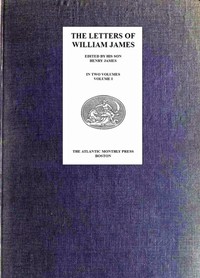
The Letters of William James, Vol. 1 by William James
This isn't a novel with a plot in the traditional sense. Instead, it's a curated collection of personal letters written by William James between 1861 and 1884. We meet him first as a lost young man, torn between art and science, suffering from poor health and what we'd now call depression. The 'story' is the arc of his inner life. We follow his correspondence, primarily with his close-knit family, especially his novelist brother Henry. We see him study painting, then abandon it for medicine and science. We witness his struggles with a painful eye condition and a mysterious spinal injury that plagued him for years. The letters track his journey from a directionless student to a Harvard professor, slowly finding his voice in psychology and philosophy.
Why You Should Read It
You should read this to see a legend with his guard completely down. The William James here is not the polished lecturer. He's vulnerable, confessing his 'soul-sickness' and fears of failure. He's also witty and sharp, gossiping about acquaintances and poking fun at European customs during his travels. The letters to Henry are particularly special. You see two genius brothers in a lifelong conversation, supporting and challenging each other. William urges Henry to write more concretely; Henry's success both inspires and quietly pressures William. It’s a masterclass in how relationships shape our intellect. Reading this, you understand that James's later ideas about pragmatism and the stream of consciousness didn't come from an ivory tower. They were forged in the fire of his own very real, very human suffering and searching.
Final Verdict
This book is perfect for anyone who loves biography, history, or psychology but wants a more intimate, unvarnished look. It's for readers who enjoy peeking behind the curtain of fame. If you liked the personal glimpses in a biography like Walter Isaacson's 'Leonardo da Vinci' or the brotherly dynamic in 'The Wes Anderson Collection,' you'll love this. It’s not a quick beach read, but it's a profoundly rewarding one. You'll come away feeling like you've had a long, deep conversation with a fascinating and deeply relatable friend—who just happens to have helped shape modern thought.
No rights are reserved for this publication. Preserving history for future generations.
Susan Martinez
5 months agoI've been looking for a reliable source on this topic, and the formatting on mobile devices is surprisingly crisp and clear. This has become my go-to guide for this specific topic.
Jessica Jones
2 years agoMy first impression was quite positive because the argument presented in the middle section is particularly compelling. The insights gained here are worth every minute of reading.

Christopher Miller
11 months agoI wanted to compare this perspective with traditional views, the author clearly has a deep mastery of the subject matter. A rare gem in a sea of mediocre content.