About 286 minutes
The mind of primitive man — Text and Context
Society Culture
65,738 recorded words. 16 minutes difference from this book's estimate.
View Gutenberg source #71630
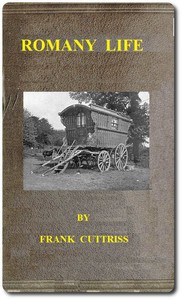
For Romany Life Experienced and Observed during many Years of Friendly Intercourse with the Gypsies — Background and Themes, the stored edition analysis reports 62,027 words, 4 hr 30 min estimated reading time, and 8 detected text sections.
The text analysis averages about 33.3 words per sentence, while the detected sections provide another way to judge how the source is divided.
Project Gutenberg metadata also associates the work with “Romanies -- England,” connecting these edition facts with the source record’s subject description.
Explore this collection
These alternatives are selected using recorded categories and estimated reading time.
About 286 minutes
Society Culture
65,738 recorded words. 16 minutes difference from this book's estimate.
View Gutenberg source #71630About 307 minutes
Society Culture
70,452 recorded words. 37 minutes difference from this book's estimate.
View Gutenberg source #50077About 231 minutes
Society Culture
53,098 recorded words. 39 minutes difference from this book's estimate.
View Gutenberg source #54704Search stored excerpts and compare books → Choose by your preferences →
Choices use stored catalog measurements. Estimates vary with reading speed. A shared category is a catalog label, not a claim that two books have the same argument or literary quality.
Search reads excerpt text stored with this catalog and links to its associated Gutenberg record. The connection is stored in the site database; this tool does not recheck that every excerpt is word-for-word identical to that external record. Excerpt search does not cover every chapter and does not verify historical publication dates.
Catalog snapshot checked: 2026-09-25. Coverage: 91 public books, 91 available source excerpts.
Read the complete public-domain text at its original source.
Read on Project GutenbergFrank Cuttriss opens his 1915 study with a pointed critique of received ideas about Gypsies, insisting that most published accounts are fictional because their authors never gained real access. He claims to have done so by speaking Romany, living among his subjects, and being accepted as a kind of insider—a status he attributes partly to the Gypsies' belief that he has "a good deal of the true Romany" in his composition. The book's value, he argues, rests entirely on this trust and on his refusal to add "a certain amount of fiction" for glitter.
Cuttriss devotes careful attention to the Romany language, not as a mere vocabulary list but as a system of idioms that outsiders routinely misunderstand. He reproduces a four-line test—"Can you rokkra Romany? Can you play the bosh?"—and explains that its real meaning is not literal but a challenge: Are you a master of the tongue? Can you hold your own in argument? Can you face prison without flinching? The final line, "Can you chin the cosh?" (cut the stick), he glosses as a question of whether one can earn a living as a Gypsy. This emphasis on idiomatic knowledge positions language as the key boundary between Gypsy and gorgio.
The excerpts capture snatches of conversation that reveal a distinct moral code. One woman declares, "Swear words was sent for our use, and what I says is,—a man or woman as swears and don't mean nothin' by it, will be forgiven, but not a person as tells a lie." Cuttriss notes that lying to a gorgio is considered permissible, but lying to one's own people marks one as "an out-and-out bad 'un." Another woman, hearing her son swear, says she "did like to hear him swear, as he 'always swore so hearty it did her real good.'" These reported remarks, presented without overt judgment, give the reader a sense of the community's own logic.
Cuttriss's descriptive prose is most vivid when he sets a scene. On the night before a fair, he writes: "Around us, about the fair ground, weird lights now glimmered, moved and disappeared, appeared again, wandered and went out, fires here and there flared up for a minute, died down, flickered and left a glow." The passage conveys a restless, half-lit world of preparation. Amid this, a man stumbles over a peg and "relieved his feelings in the customary manner," while another remarks that "old Noah had got 'em again"—a phrase left unexplained, as if the reader is expected to catch the idiom or accept its opacity.
Cuttriss is careful to frame his own role. He admits he cannot verify the Gypsies' claim that he has Romany blood, but notes that "there can, however, be no doubt whatever of their belief in it." This belief, combined with his use of their tongue—which he says feels like "a language I might have used in a previous existence"—gave him an "open sesame" to their inner circle. He insists that his accounts are truthful because he lived "among them and as one of them," understanding the "lingual conglomerate heard nowhere but among these people." The preface thus establishes a narrator who is neither fully inside nor outside, but uniquely positioned.
Cuttriss's method—recording what he heard and saw without fictional embellishment—makes Romany Life a document of early twentieth-century ethnographic observation, shaped by the author's personal relationships and linguistic competence. Readers should attend to the reported speech and idiomatic glosses, which carry the book's most specific evidence of a culture that deliberately kept itself obscure to outsiders.
I remember evenings when my grandmother’s stories about her rural childhood felt like a private language, just as Cuttriss describes the gap between seeing and knowing. That same warmth surfaced reading The Negro Farmer — Story, Setting & Ideas, where the land holds more than what a stranger’s eye can carry. Both books reminded me how quietly we misunderstand each other’s daily lives.
A brief reflection can help important ideas stay with you longer.